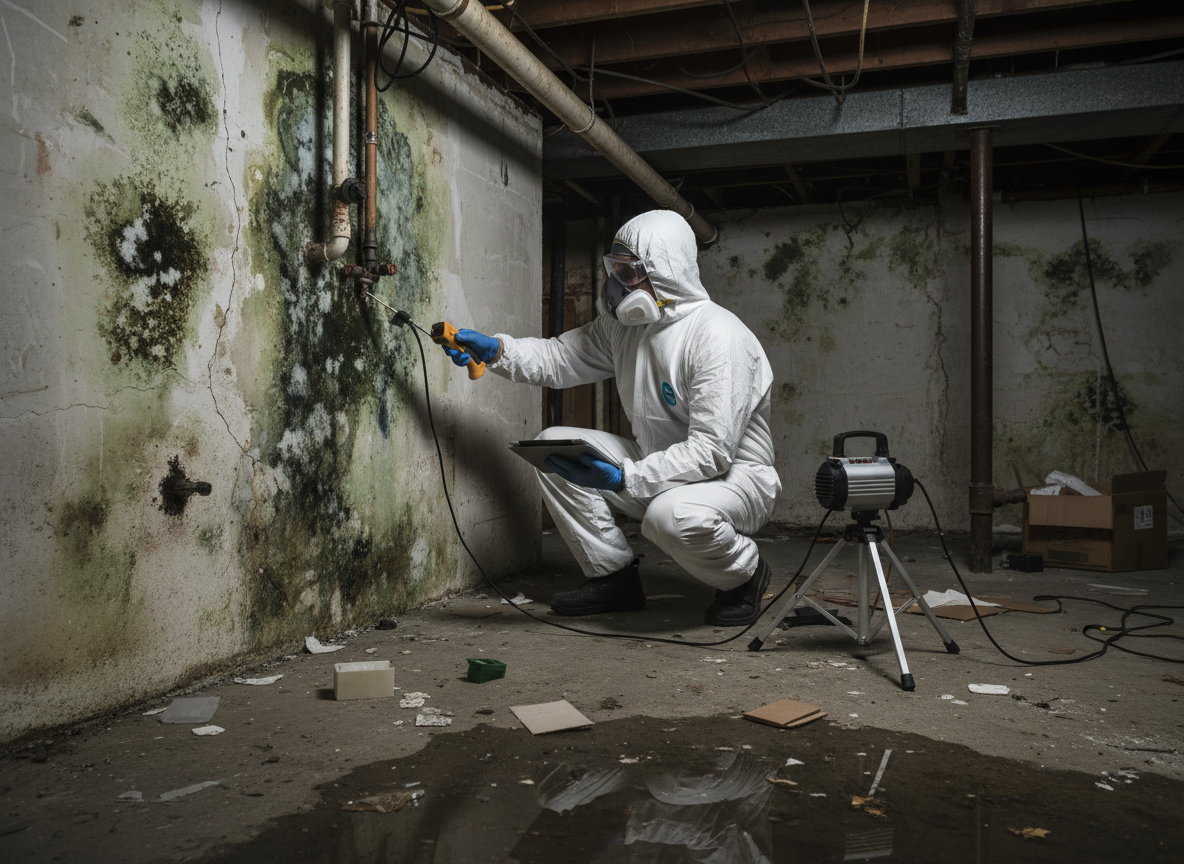
Northridge homes built in the 1950s through 1970s around Reseda Boulevard and in Northridge East often feature partial basements or below-grade rooms with concrete slab foundations that sit close to the water table in parts of Los Angeles County. These older builds frequently lack modern vapor barriers, allowing condensation to form when hot summer temperatures meet cooler ground moisture. A basement mold inspection must check behind finished walls and under stairs where airflow is restricted, especially near properties bordering the California State University Northridge campus where irrigation runoff can add unexpected humidity.
Winter rains in the Mediterranean climate bring the real risk here, as water flows down the gentle slopes common in Northridge West toward Granada Hills and Porter Ranch. Homeowners may not notice seepage until musty odors appear months later because the hot summers dry surface areas quickly while trapping moisture deeper in the soil against foundation walls. Inspectors look for efflorescence on concrete, warped baseboards, and HVAC returns pulling air from below-grade spaces, all of which are frequent in single-family homes along Nordhoff Street.
Access challenges arise in many Northridge basements due to low ceilings and stored items that block visual inspection of sill plates and rim joists. The service accounts for these realities by using moisture meters on multiple wall sections and checking exterior grading around the 19350 Nordhoff Way service area homes. Early detection prevents spores from migrating upward into living spaces through shared ductwork common in post-war construction.
Technician insight
In Northridge, the thing that catches most people out with Basement mold inspection is the way winter rain pools against 1950s-era foundations on the slight downhill grades in Northridge West before the hot summers hide the evidence behind dry surfaces.
Northridge East Foundation Seepage
A homeowner near California State University Northridge reported a persistent odor after winter storms. Inspection revealed moisture trapped behind drywall on the north foundation wall due to poor exterior grading. Targeted moisture mapping confirmed the source without full wall demolition. The assessment allowed focused drying before any growth spread upward.
How it works
- 1
Site Walkthrough
Technician examines exterior grading, downspouts, and foundation exposure around the Northridge property first.
- 2
Moisture Mapping
Readings taken on walls, floors, and ceilings using calibrated meters to locate hidden damp zones.
- 3
Visual and Odor Assessment
Inspection of corners, behind appliances, and HVAC returns for discoloration or musty smells.
- 4
Report and Recommendations
Findings documented with photos and next-step options tailored to the home's age and location.
Pricing
Cost depends on basement size, access difficulty, and whether finished walls require removal for inspection.