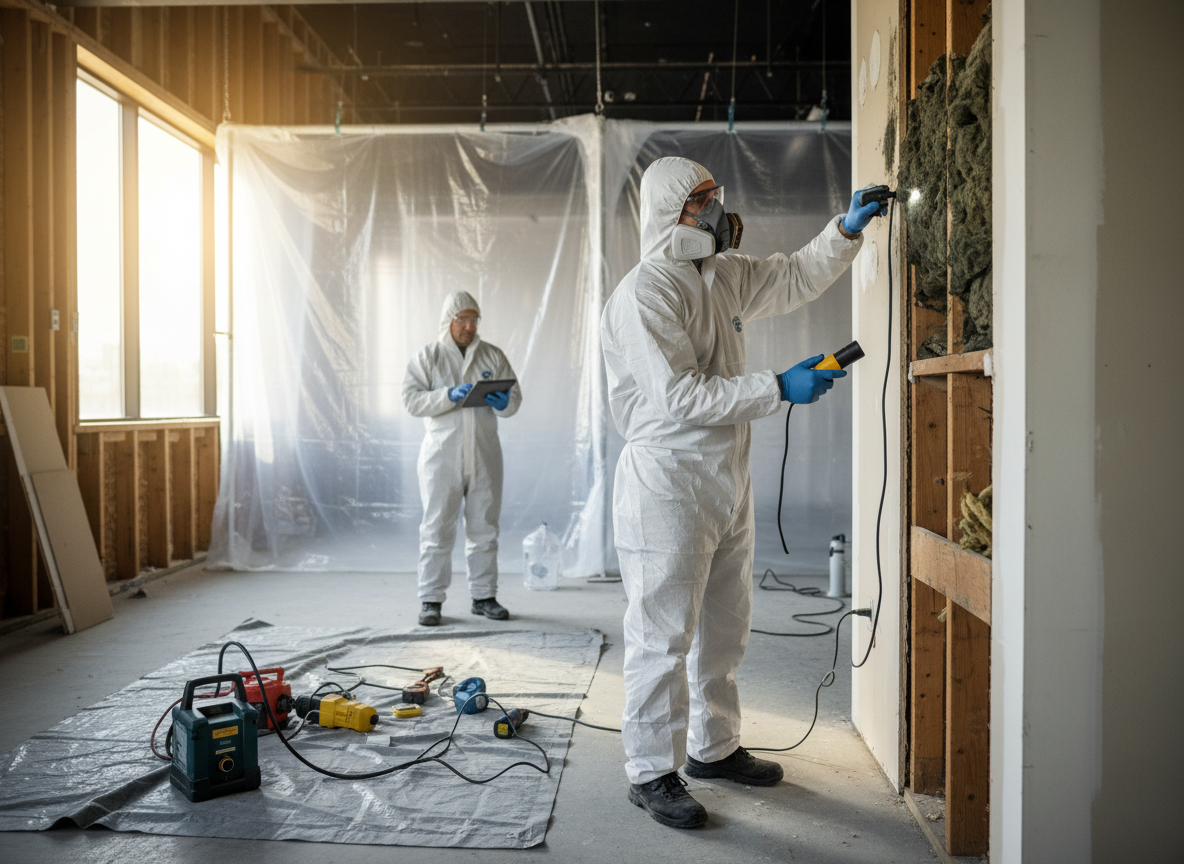
Commercial properties along Reseda Boulevard and near the Northridge Fashion Center often feature flat roofs and older HVAC systems installed when Northridge was developed in the 1960s and 1970s. These systems can develop hidden condensation lines that feed mold growth behind drop ceilings and in mechanical rooms during the hot Mediterranean summers. Inspectors must pull panels, use moisture meters on concrete block walls, and check return-air plenums that serve multiple tenant spaces without disrupting business hours.
Buildings on the California State University Northridge campus and in the adjacent commercial corridors face additional risks from irrigation runoff and poor drainage around loading docks. Water migrates under slab foundations, especially after rare but intense winter rains, and travels laterally into storage rooms and electrical closets. A proper inspection maps these moisture pathways with thermal imaging and documents any penetrations through fire-rated walls that could allow spores to move between suites.
Los Angeles County air-quality rules require detailed reporting when visible mold exceeds ten square feet in occupied commercial spaces. Technicians document every affected material—carpet pad, gypsum board, or acoustic tile—note the species via tape-lift samples, and provide a written scope that contractors can follow without reopening walls later. This level of detail prevents disputes with property managers who must coordinate with multiple tenants in Northridge East and West.
Technician insight
In Northridge, the thing that catches most people out with Commercial mold inspection is the way summer heat loads on older rooftop units create condensation that travels through shared ceiling plenums into neighboring suites. A single leak near the Northridge Fashion Center can affect three or four tenants before anyone notices.
Retail Strip Center on Reseda Boulevard
A property manager noticed musty odors in two adjacent storefronts near the Northridge Fashion Center. We traced elevated moisture to a clogged condensate line from a shared rooftop unit that had been dripping into the common ceiling cavity for months. After mapping the full extent and sampling, we delivered a report the manager could hand directly to a remediation crew without further disruption to tenants.
How it works
- 1
Initial Walk-Through
Review building plans and speak with facilities staff about past leaks or tenant complaints in the specific Northridge property.
- 2
Moisture Mapping
Use meters and thermal cameras on walls, ceilings, and HVAC components while the building remains occupied.
- 3
Sampling and Documentation
Collect air and surface samples from suspect areas and photograph every finding for the written report.
- 4
Report Delivery
Provide a bound report with photos, lab results, and a clear remediation scope within two business days.
- 5
Follow-Up Consultation
Meet with the property manager to explain findings and answer questions before any work begins.
Pricing
Pricing varies by building size, number of HVAC zones, and access difficulty; most Northridge commercial inspections fall into a mid-range bracket that reflects Los Angeles County labor and lab costs.