2026-10-23 ·
How Winter Rains Trigger Mold in Northridge Attics
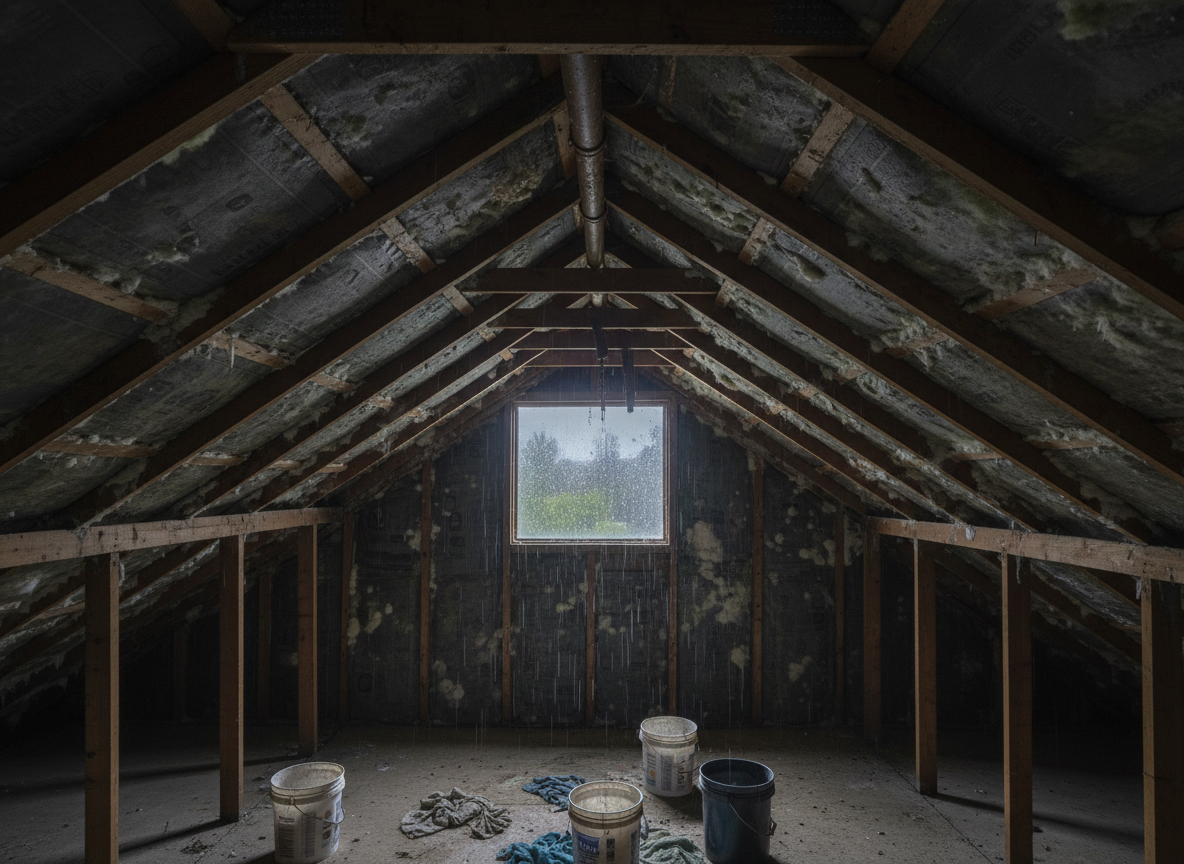
Winter rains trigger mold in Northridge attics when water enters through roof gaps or flashing failures, often allowing growth to begin within 48 hours on damp wood and insulation in homes across Northridge East and Northridge West.
How Winter Rains Reach Attic Spaces
Northridge experiences concentrated winter downpours after months of hot, dry summers that dry out roof materials and create cracks. These storms send water along Reseda Boulevard corridors into single-family homes built in the 1960s and 1970s, where aging asphalt shingles and vent boots fail first. Once inside, moisture pools on ceiling joists and fiberglass batts near the California State University Northridge campus area, where tree cover can slow drying. Homes in adjacent Porter Ranch and Granada Hills face similar patterns because shared ridge lines direct runoff the same way. The result is hidden saturation that homeowners notice only after odors reach living spaces below.
Why Northridge Housing Stock Increases Risk
Many properties in Northridge East feature low-slope roofs and minimal ridge venting that trap humidity after each rain event. Los Angeles County building practices from earlier decades left limited insulation depth, so water spreads quickly across larger surfaces before evaporating. In Northridge West, hillside lots near Chatsworth create additional drainage challenges when gutters overflow during heavy February storms. These conditions differ from newer developments in Porter Ranch, where improved underlayment reduces but does not eliminate attic moisture entry points during prolonged wet periods.
Visible and Hidden Indicators After Storms
Homeowners often first detect musty smells in upper hallways or see dark staining on ceiling corners near bathroom exhaust fans. In attics, small colonies appear on oriented strand board sheathing within days when relative humidity stays elevated. Checking insulation near the Northridge Fashion Center vicinity reveals soft, discolored patches that crumble on contact. Related crawl space issues can compound the problem, which is why many residents review Inspecting Crawl Spaces for Moisture in Northridge Homes after winter events.
Practical Next Steps for Local Homeowners
Start by documenting water stains from a safe distance without disturbing materials. Schedule attic mold testing and removal through a service familiar with Los Angeles County permitting requirements. Compare findings against the guidance in Choosing Between DIY Testing and Professional Evaluation in Northridge to decide whether in-house sampling suffices or full assessment is warranted. Address roof repairs before re-insulating to prevent recurrence during the next rainy season.
Long-Term Prevention in the San Fernando Valley
Improving attic ventilation with additional soffit and ridge vents helps move moist air out after storms. Sealing plumbing penetrations and upgrading flashing around chimneys reduces entry points common in Northridge's older stock. Residents in nearby Winnetka and Canoga Park report fewer callbacks when these upgrades follow professional evaluation rather than repeated surface treatments alone.