2026-10-23 ·
Mold Concerns After Plumbing Leaks in San Fernando Valley Kitchens
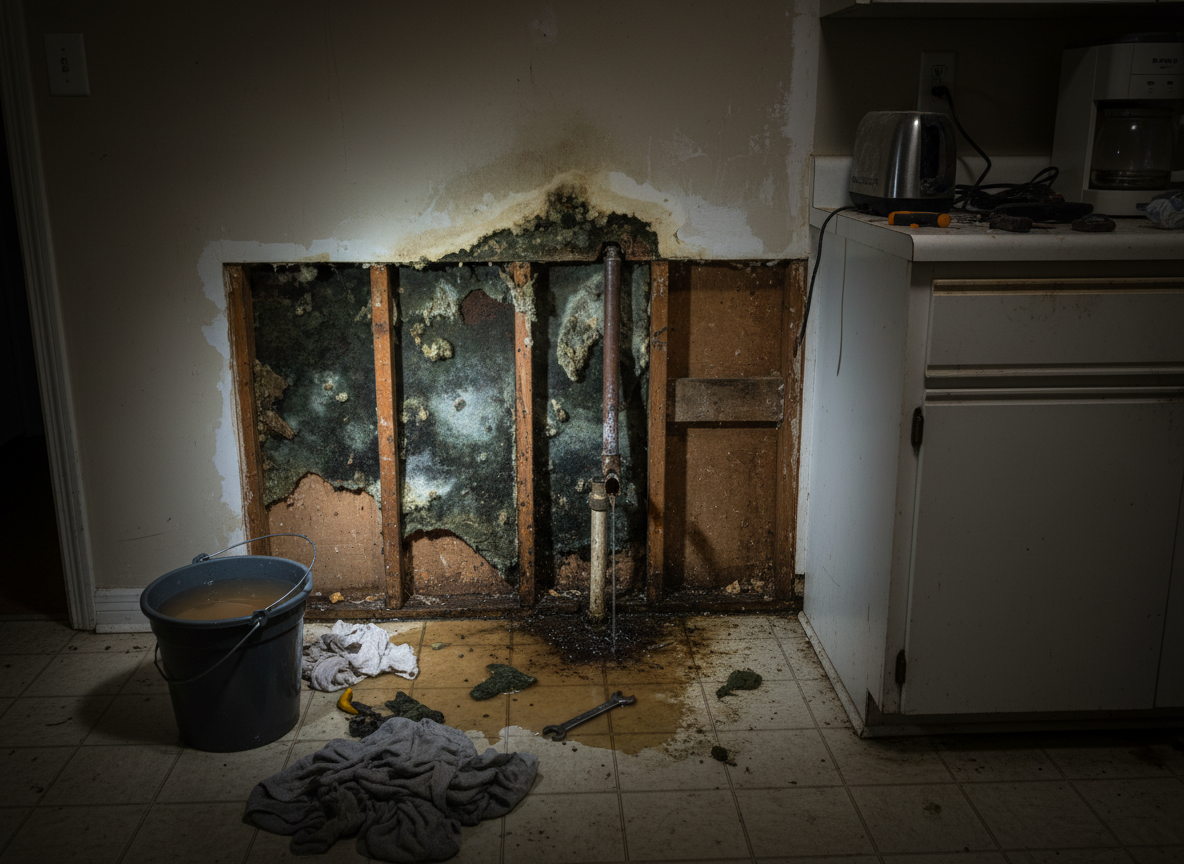
Plumbing leaks in San Fernando Valley kitchens often trigger visible or hidden mold within 24 to 48 hours when water remains trapped under sinks, behind dishwashers, or along Reseda Boulevard-era cabinet bases in Northridge East and Northridge West homes.
How Kitchen Plumbing Leaks Create Mold Risks
Leaks from supply lines or drain pipes under 40- to 60-year-old Northridge kitchens allow water to pool against particleboard or plywood, feeding spores that arrive daily through open windows during hot Mediterranean summers. In homes near California State University Northridge, repeated dishwasher cycles and garbage disposal use increase the chance of slow drips that stay undetected until cabinets warp. The combination of warm daytime temperatures above 85 degrees and overnight humidity keeps surfaces damp long enough for colonies to establish on drywall backing or floor joists. Property owners in Northridge Estates and Knollwood frequently discover growth only after noticing musty odors near the sink base or discolored grout along tile edges. Addressing the leak source within the first day limits spread into adjacent walls shared with laundry rooms or pantries.
Impact of San Fernando Valley Climate on Mold Development
Northridge's hot summers push indoor humidity higher when residents run air conditioning intermittently, allowing moisture from a single pipe leak to evaporate slowly into wall cavities rather than drying outright. Los Angeles County records show Valley neighborhoods like Porter Ranch and Granada Hills experience longer dry periods punctuated by sudden thunderstorms that add outdoor humidity through open vents. This cycle makes under-cabinet spaces in Chatsworth-adjacent homes particularly vulnerable because original 1960s plumbing often uses galvanized lines that corrode at joints. When leaks occur near Northridge Fashion Center retail corridors, the same warm air that speeds evaporation also accelerates spore germination once relative humidity exceeds 60 percent for more than a day. Local operators note that crawl spaces beneath single-story ranch homes retain this moisture longer than slab-on-grade construction common in newer Porter Ranch tracts.
Identifying Mold in Northridge Kitchens
Homeowners should check for dark staining along the toe-kick of base cabinets, softening of particleboard shelves, or a persistent earthy smell that intensifies when the dishwasher runs. In Northridge West kitchens with original linoleum, water can wick under the flooring and support growth along the subfloor seams without obvious ceiling stains above. Residents near CSUN Campus Area sometimes find colonies on the back of upper cabinets when steam from cooking combines with undetected sink drips. Professional evaluation through services such as water damage mold remediation reveals whether the issue extends into wall cavities or HVAC returns common in 1970s construction. Early inspection prevents the need for larger containment setups that affect meal preparation areas for days.
Recommended Response Steps for Homeowners
Shut off the water supply at the angle stop or main valve immediately, then remove standing water with a wet-dry vacuum before any porous materials absorb more liquid. Document the affected area with photos that include the 19350 Nordhoff Way address reference for insurance purposes if claims arise later. Contact a 24/7 service based at 19350 Nordhoff Way, Northridge, CA 91324 to assess moisture levels behind cabinets rather than relying on surface cleaning alone. Follow up with mold remediation near me protocols that include HEPA vacuuming and antimicrobial treatment of exposed framing. Review the related guide on what affects mold remediation costs in Northridge to understand variables such as cabinet removal versus in-place drying in older San Fernando Valley stock.